

By Efthalia Kaderoglou, PgCert, M.Ed. Special Pedagogue, Mental Health Consultant specializing in Neurodivergence (translation by A. Baltatzi)
“The people who transformed the understanding of autism did not begin in university lecture halls or conference auditoriums. Their work emerged from a fundamental need: to exist with dignity in a world that viewed them through the lens of deficit. The neurodiversity movement was not born as an abstract theory, but as a form of resistance.
Within early autistic communities — through mailing lists, forums, and self-organized networks — a new narrative slowly took shape: autism was not something to be eliminated, but a form of human diversity worthy of understanding and respect. Yet for this narrative to acquire continuity, influence, and intellectual grounding, it required individuals capable of bridging lived experience with theory.
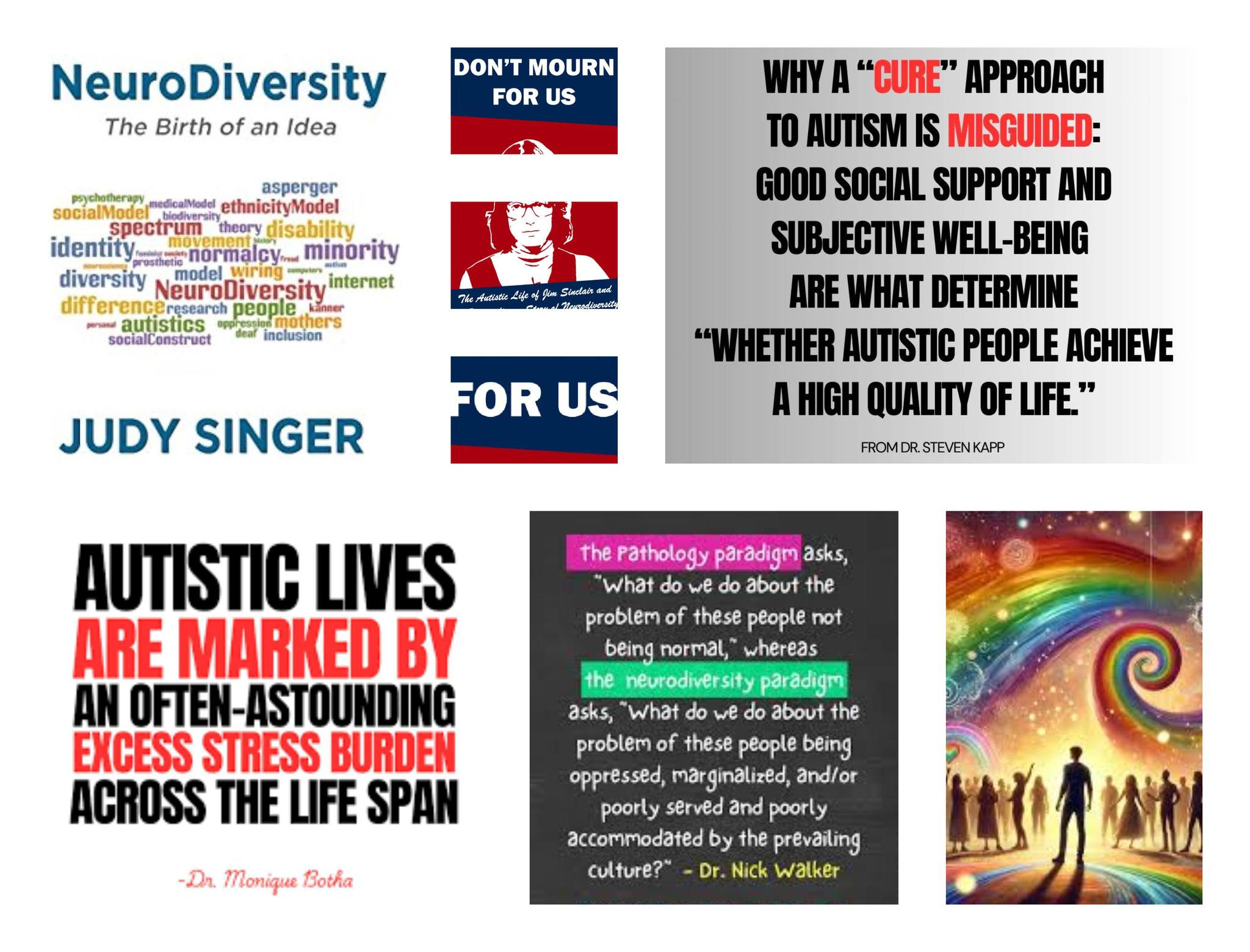
One of the most pivotal figures was JIM SINCLAIR. At a time when autism was framed primarily as a family tragedy, Sinclair dared to overturn the prevailing narrative. In the landmark text “Don’t Mourn for Us”, he urged parents to stop grieving a “lost child” who had never existed. Autism, he argued, is not something separable from the person; it is the very way that person experiences and inhabits the world. This was not merely an emotional appeal. It was a political intervention. It laid the groundwork for autistic self-determination and opened the path toward understanding autism as identity rather than defect.
A few years later, JUDY SINGER gave a name to what was already beginning to emerge. The term “neurodiversity” was more than a new word; it represented a profound conceptual shift. Neurological differences no longer had to be understood solely as pathologies to be corrected, but could instead be recognized as natural variations within human experience. Singer helped move autism beyond the confines of a purely medical framework into a broader sociological and political context — one in which the central question becomes not “How do we fix the individual?” but “How do we build a society capable of accommodating different ways of being?”
This transformation did not end at the level of language. It evolved into a broad theoretical and activist movement that continues to shape contemporary discourse. Thinkers and researchers such as NICK WALKER have contributed substantially to the development of the neurodiversity paradigm — a framework that replaces the logic of “treatment” with meaningful support, emphasizing justice, accessibility, and acceptance. At the same time, researchers such as STEVEN KAPP and MONIQUE BOTHA foreground the lived experiences of autistic people themselves, challenging deeply entrenched assumptions of deficit and dysfunction.
What unites all these people is not just their ideas, but their insistence on changing the context in which we talk about autism. To move from pathologizing to relating. From normativity to diversity. From silence to voice.
Perhaps, ultimately, the most radical aspect of this movement is that it asks for more than understanding. It asks for a change. It calls upon all of us to reconsider not how autism can be “fixed,” but how the world itself might change so that difference is no longer treated as a problem.
These are the people who changed autism. And their work continues through every voice that chooses to be heard.”.
H πρωτότυπη ανάρτηση της Ευθαλίας Καδέρογλου: https://www.facebook.com/photo/?fbid=26667304132939665&set=a.5924941850935863
Αφήστε μια απάντηση